
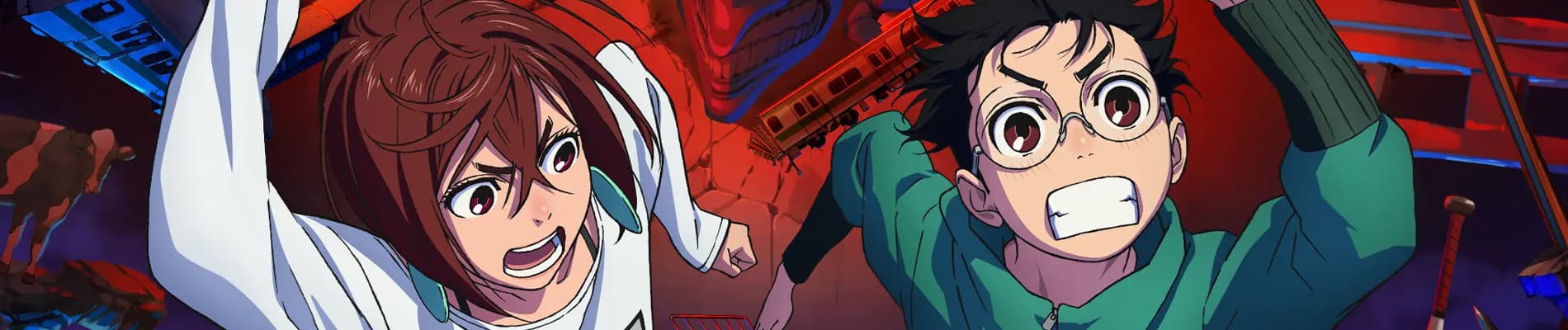
Dandadan's Evil Eye Arc and Jiji, Explained
Dandadan Season 2 wrapped up in September 2025, and the conversation that dominated those twelve weeks was not aliens or grandmas with curses. It was a kid named Jiji and the thing living behind his eyes. If you finished the season a little dizzy about what the Evil Eye actually is, who Jiji was before all of it, and why a creepy house in the middle of nowhere kicked off the whole mess, you are not alone. The arc moves fast, layers two storylines on top of each other, and buries its best reveals under jokes about hot soup.
So here is the clean version. Everything you need to understand the Evil Eye arc, laid out in order, with the heavy spoilers clearly marked so you can read the setup safely.
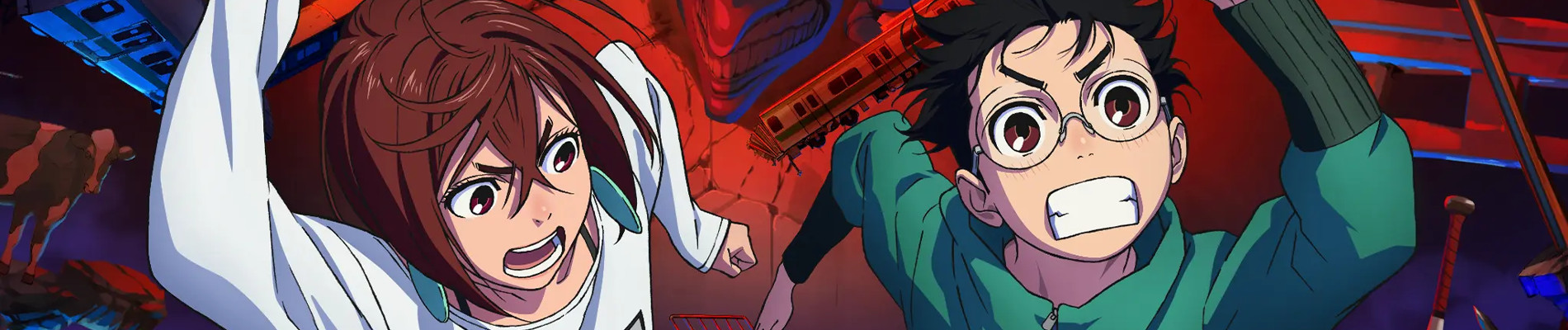
Quick answer
The Evil Eye arc is the centerpiece of Dandadan Season 2. It follows Momo and Okarun trying to help Momo's childhood friend Jiji, whose haunted family home turns out to be a sacrificial site tied to a centuries-old curse. Jiji gets possessed by a vengeful spirit called the Evil Eye, and most of the arc is the group figuring out how to keep him stable, win the fight, and ultimately work out an arrangement nobody saw coming.
- Jiji's real name is Jin Enjoji. He's Momo's elementary-school friend and her first crush.
- The Evil Eye is a yokai born from the resentful spirit of a sacrificed child.
- The Cursed House belonged to the Kito family, who fed children to a monster in the local volcano for nearly 200 years.
- Season 2 aired July 3 through September 18/19, 2025 (twelve episodes, Science SARU). It has concluded. No Season 3 air date has been announced yet.
A quick housekeeping note before we go deeper: trackers number these episodes two different ways. Most sites, including Anime News Network, use continuous numbering, so Season 2 is episodes 13 through 24, not 1 through 12. When people say "the Evil Eye fight wraps in episode 3," they mean episode 15 on the continuous count. We'll flag both where it matters.
Who is Jiji?
Jiji is the breakout character of the season, and the show plays a slightly sneaky long game with him. Way back in Season 1, episode 1, Momo mentions a boy who used to tease her about a protective ritual her grandmother Seiko performed. That throwaway line? That was Jiji. He's seeded into the very first episode of the entire series before he ever shows up.
His full name is Jin Enjoji, and he was Momo's friend back in elementary school. He was also her first love, which the show is not subtle about and which immediately complicates the Momo-and-Okarun dynamic fans had spent a whole season rooting for. He reappears at the tail end of Season 1 and properly debuts in episode 11, then ends up moving in with the cast when he comes to Seiko for help with a problem he can't handle on his own: his family's house is haunted, and his parents have already been hospitalized because of it.
Here's the detail that makes Jiji matter beyond the love-triangle drama. He has innate spiritual power. He can see spirits, an ability that got stronger through contact with the Evil Eye, and that latent sensitivity is exactly what makes him such a perfect target. A normal person can't host something like the Evil Eye. Jiji can. The curse didn't pick him at random; it picked him because he was wired for it.
The Cursed House: where it all starts
Before the Evil Eye arc proper, there's the Cursed House arc, and you can't understand one without the other. The two run together across the front half of Season 2, with the Cursed House setup leaking into the very last episode of Season 1, fittingly titled "Let's Go to the Cursed House."
The premise is straightforward horror. Jiji's family home sits in an eerie town the Kito family has ruled for generations. The house is not just old and spooky; it was purpose-built. Momo and Okarun go to investigate because Jiji's parents were hospitalized after moving in, and what they uncover is far worse than a standard haunting.
The Kito family ran a sacrificial house for almost two centuries. The setup, once you see it, is genuinely grim: lure in families with children, then use those children as offerings. The matriarch, Naki Kito, is a Subterranean who carried out the sacrifices across more than 200 years. This wasn't superstition or ritual theater. It was an industrial-scale, multigenerational operation with a very specific purpose.
| Element | What it is |
|---|---|
| The Cursed House | A "sacrificial house" built by the Kito family to lure in families with children |
| The Kito family | Generational rulers of the town; ran the sacrifices for ~200 years |
| Naki Kito | The Subterranean matriarch who carried out the offerings |
| The Tsuchinoko | The Mongolian Death Worm in the volcano that demanded the sacrifices |
That last entry is the engine behind everything.
Why the sacrifices happened: the Tsuchinoko
The Kito family wasn't sacrificing children for fun or out of pure cruelty. They were buying off a monster.
A Mongolian Death Worm lived in the village's volcano, revered locally as the Tsuchinoko. When it got hungry, it made the volcano erupt, which would obviously wipe out the town. So the Kito family struck a horrific bargain: feed it a child, and the volcano stays dormant. For nearly 200 years, that was the arrangement keeping the village alive.
It's a classic Dandadan move, taking a folkloric creature most people half-remember from a video game or a cryptid list and dropping it into a story about generational trauma and human sacrifice. The Tsuchinoko isn't a throwaway gag monster, either. It becomes a direct physical threat during the arc's climax, attacking right as the worst of the supernatural mess comes to a head.
What is the Evil Eye?
Spoiler warning: this section reveals the Evil Eye's origin and the core of its backstory.
Here's where the arc earns its reputation. The Evil Eye is not a generic monster-of-the-week. It's a vengeful yokai born from the spirit of one of those sacrificed children.
The backstory the show eventually shows us is brutal. The child who became the Evil Eye was scrawny and malnourished, kept in deplorable conditions in the Kito family's sacrificial house. He spent his short life watching other children play through a window, knowing he'd never be one of them. When he was finally killed, his suffering and resentment didn't dissipate. They curdled into a spirit so full of hatred that it stopped distinguishing between the Kito family who wronged him and the rest of humanity. His vow became simple and total: kill every human he ever encounters.
That reframes the whole arc. The Evil Eye is a villain, yes, and it does monstrous things. But it's also a victim, the direct product of the exact atrocity the Kito family committed for two centuries. Dandadan rarely lets you hate something cleanly, and this is the clearest example. The thing trying to kill our heroes is, underneath, a murdered child who never got to play.
Its powers match its origin's nastiness:
- A death-curse through eye contact, capable of inducing self-harm impulses in whoever meets its gaze
- Memory-sharing, which it uses to show Jiji its past
- Possession, taking over Jiji's body as a host
- Enhanced physical ability when merged with Jiji, including superhuman strength and reflexes, plus the ability to summon victims' grudges as tangible constructs
That memory-sharing power is the hinge the whole arc turns on.
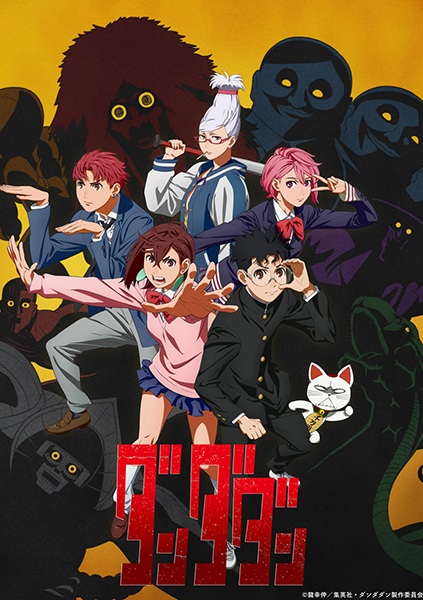
How Jiji gets possessed
Spoiler warning: this covers the possession and how it actually happens.
The Evil Eye was bound to the Cursed House, and it haunted the Enjoji family after they moved in. But it doesn't just brute-force its way into Jiji. It works on him emotionally first.
Using its memory-sharing ability, the Evil Eye shows Jiji its past, the window, the hunger, the cruelty. And Jiji, being a fundamentally kind person, feels genuine sympathy for it. In a weak, well-meaning moment, he tells the spirit he'll "play" with it. That's all it needs. The spirit seizes on that opening to take him over, and the full possession lands as the Tsuchinoko attacks, with everything detonating at once.
This is what makes the arc click rather than just shock. Jiji doesn't get possessed because he's careless or unlucky. He gets possessed because he extended compassion to a suffering child, and the show frames that as both his best quality and the exact thing that doomed him. The kindness was real. The trap was also real.
The hot-water trick: Seiko cracks the rules
One of the most Dandadan things about this arc is how the solution to a cosmic curse turns out to be... temperature.
Seiko, Momo's grandmother and the resident expert on this stuff, runs experiments on the possessed Jiji and discovers the trigger. Hot liquid suppresses the Evil Eye and brings Jiji back to himself. Cold liquid makes the Evil Eye manifest. Splash him with something hot and the possession reverses; let something cold touch him and the spirit surfaces.
So the group does the only sensible thing: everyone gets assigned to babysit Jiji while carrying thermoses of hot liquid, ready to dose him the second the Evil Eye starts to slip out. It's a genuinely funny stretch of the season precisely because the stakes are so high and the countermeasure is so mundane. Naturally, it goes wrong at dinner, when a single drop of cold soy sauce hits Jiji and the Evil Eye comes roaring out at the worst possible moment. (That's around Season 2 episodes 5 to 6 on the per-season count.)
The climax and the agreement nobody expected
Spoiler warning: this is the resolution of the Evil Eye arc, including how the fight ends.
The Evil Eye, now in control of Jiji's body, fights Momo, and then Okarun steps in to protect her. The confrontation resolves in the opening stretch of the season, with the Evil Eye defeated around episode 3 of the per-season count (episode 15 continuous), Okarun landing the decisive blow.
But here's the twist that elevates the whole arc above a standard exorcism story: they don't get rid of the Evil Eye. Given everything they've learned about what it actually is, a straightforward banishment would feel less like victory and more like finishing the Kito family's job.
Instead, Jiji and the Evil Eye reach an arrangement. Jiji becomes its permanent container, and the two coexist in the same body under an agreement: the Evil Eye won't harm anyone else, with one carved-out exception, its ongoing battles against Okarun. It's a deeply weird, very Dandadan resolution, a peace treaty between a teenager and the ghost of a murdered child sharing one skull. And it leaves Jiji permanently changed in a way that keeps paying off as the series continues.
Where the Evil Eye arc sits in the bigger story
If you want to read ahead in the manga, here's the map. The Evil Eye arc is the fifth story arc of Dandadan, running roughly chapters 51 through 62. (The exact end chapter is the one soft spot; some guides list 63. The Kaiju arc picks up right after.) It comes directly after the Cursed House arc, which is why the anime adapts the two as one continuous stretch.
| Arc | Manga chapters | Role in Season 2 |
|---|---|---|
| Cursed House | ~28-50 | Jiji's intro and possession; opens the season |
| Evil Eye | ~51-62 | The marquee arc; controlling and resolving the spirit |
| Kaiju | ~63 onward | Begins late in the season; carries the finale |
Season 2 adapts the Cursed House arc, the Evil Eye arc, and the start of the Kaiju arc across its twelve episodes. The Evil Eye arc was so clearly the season's selling point that the first three episodes got a theatrical release: a compilation film, Dan Da Dan: Evil Eye, hit cinemas in late May and early June 2025 (North America on June 6 via GKIDS) ahead of the TV premiere. It bundled a Season 1 recap, the start of the arc, the first three Season 2 episodes, and an interview with co-directors Fuga Yamashiro and Abel Gongora. Studios don't put an arc's name on a theater marquee unless they're confident it's the good stuff.
Why this arc landed so hard
Dandadan was already a phenomenon coming out of Season 1, but the Evil Eye arc is where a lot of viewers stopped seeing the show as "the funny one about aliens and ghosts" and started taking it seriously as drama. It does three things at once and somehow keeps all of them in the air:
It's scary. The Cursed House is real horror, and the sacrificial-house reveal is the kind of thing that sits with you.
It's funny. The hot-thermos surveillance operation and the soy-sauce disaster are peak comedic timing.
And it's genuinely sad. The Evil Eye's backstory recontextualizes everything, turning the season's antagonist into one of its most tragic figures. That tonal range, swinging from a child's murder to a thermos gag to a peace treaty without ever feeling tonally broken, is exactly what Science SARU's adaptation nails. It's the same quality that puts Dandadan in the conversation alongside the best supernatural anime running right now.
As for what's next: Season 2 has concluded, the Kaiju arc is teed up for whatever comes after, and there's no announced air date for a third season yet. The manga, of course, is well past all of this if you can't wait.
Catch up before the next chapter
The Evil Eye arc is Dandadan at full power, and it's the kind of arc that rewards a rewatch once you know where Jiji ends up. Track Dandadan on MyAnimePulse to mark your progress through both seasons, get notified the moment a Season 3 date drops, and find your next obsession while you wait. Looking for more shows that mix horror, comedy, and heart this cleanly? Start with our supernatural picks and build your watchlist from there.