

Captain Tsubasa Came to Life: Japan vs Brazil at the 2026 World Cup, Explained
Japan played Brazil in the Round of 32 of the 2026 World Cup, and the football press, the broadcasters, and half of social media all reached for the same reference: Captain Tsubasa, the soccer anime whose most famous moment is a fictional final where Japan beat Brazil. Reality didn't follow the script. Brazil escaped 2-1 with a stoppage-time winner. But the fact this fixture existed at all, Japan against Brazil with a knockout place on the line, is the anime coming to life.
This is the kind of crossover you can't manufacture. A 1980s manga about a Japanese kid who dreams of beating the best in the world, written decades before Japan were a real football nation, and decades later the actual national team went toe to toe with the actual Brazil with a place in the last 16 at stake. Here's the real story behind why everyone's saying the same thing, the match itself, and the long list of real footballers this one anime quietly produced.
The match: Japan vs Brazil, Round of 32
The result first. Japan met Brazil on Monday, June 29, 2026 at NRG Stadium in Houston, in the first knockout round of the expanded 48-team World Cup, and Brazil won 2-1. Japan led through Kaishu Sano in the 29th minute and looked set to stun the five-time champions, but Casemiro headed in an equalizer just before the hour, and Gabriel Martinelli won it deep in stoppage time (90+5). It was Brazil's first knockout comeback from a halftime deficit since 1938. Japan are out; Brazil go through to the Round of 16.
How they got here tells you why it's a story:
- Japan topped expectations in Group F, drawing the Netherlands 2-2, thrashing Tunisia 4-0, and drawing Sweden 1-1 to go through in second. Their seven group-stage goals are the most Japan have ever scored in a single World Cup group stage, and it's their third straight World Cup reaching the knockouts.
- Brazil came through Group C as winners, the five-time champions doing what five-time champions do.
The build-up was enormous. Japan's FA chief called the tie potentially one of the biggest in World Cup history, and Brazil legend Zico publicly warned his country that this Japan side was ready. On paper it was a runner-up against a group winner. Nobody treated it like one, and in the end Brazil needed a stoppage-time goal to settle it.
The fictional match that started all of this
So why does every outlet reach for Captain Tsubasa? Because the anime got there first.
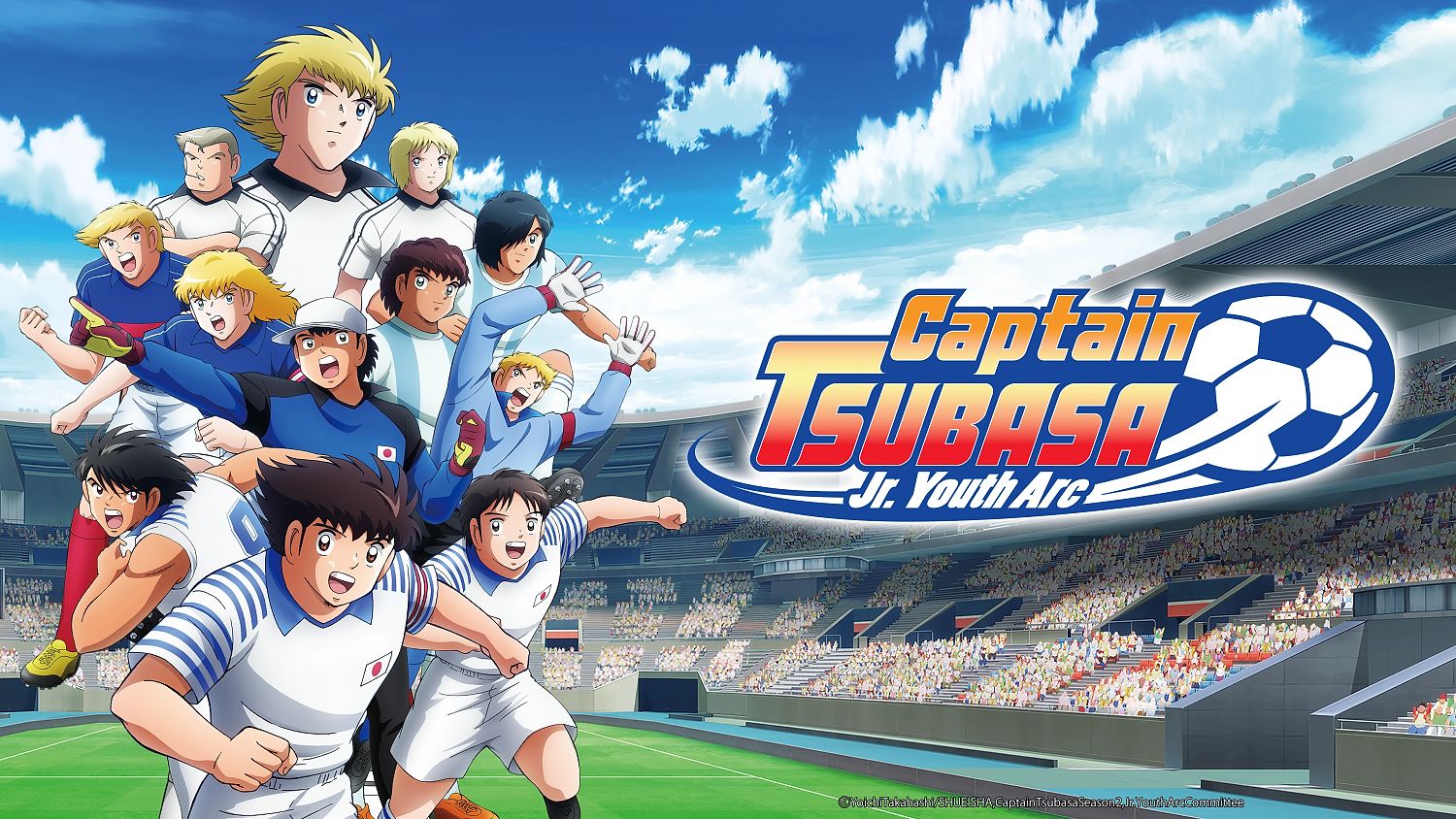
Captain Tsubasa began as a manga by Yoichi Takahashi in Shueisha's Weekly Shonen Jump in 1981, with the TV anime following in 1983. It's the story of Tsubasa Ozora, a kid obsessed with the ball ("the ball is my friend") whose entire arc is dragging Japanese football up to, and past, the giants of the sport, Brazil chief among them.
The signature moment comes in the World Youth arc: in the final of the youth World Championship, host Japan beat a favored Brazil 3-2 after extra time at Nagai Stadium in Osaka, Tsubasa scoring a hat-trick capped by a golden goal. Worth being precise here, because it gets garbled a lot: that's a youth World Championship final in the story, not a senior FIFA World Cup final. Tsubasa's senior-level World Cup dream was the long-running arc the series chased for decades. But the image, Japan beating Brazil in a world final, is the one that burned into a generation.
It already half-happened in real life
Here's the part that makes the timing feel genuinely uncanny.
On October 14, 2025, in a friendly in Tokyo, Japan beat Brazil 3-2, coming back from 2-0 down. It was Japan's first-ever win over Brazil in the fixture's history. The scoreline, 3-2, is the exact same as Captain Tsubasa's fictional final.
That result is real, recent, and on the record, and it reset the entire psychological frame going into a competitive World Cup meeting eight months later. The anime wrote the fairy tale in the 1980s. The senior national team rehearsed it for real last autumn, winning 3-2. The World Cup version flipped the ending: this time Brazil came from behind.
The footballers Captain Tsubasa actually created
This is the wild part, and it's not anime-fan hyperbole. A genuine list of world-class players grew up on this show and have said so on the record.
- Fernando Torres: "I started playing football because of this... I loved the cartoon. I wanted to be Oliver." (Oliver Atton is Tsubasa's name in the Western dub.)
- Andres Iniesta: has repeatedly credited the series and the character's playing style, and ended his career playing in Japan, the country that made the anime that inspired him.
- Hidetoshi Nakata, Japan's own first global superstar: "there was a manga cartoon about football... I read it and got inspired to play football."
- Lukas Podolski, World Cup winner and open superfan: "Captain Tsubasa has always been one of my biggest inspirations since I was a kid."
Takahashi himself has told stories of meeting players like Zinedine Zidane and Alessandro Del Piero, who shared childhood memories of imitating the show's special moves. The FIFA Museum has gone as far as describing Captain Tsubasa as a work that helped generate interest in football in Japan and around the world.
That's the real legacy. A comic about a Japanese kid chasing Brazil didn't just predict Japan vs Brazil on the biggest stage. It helped build some of the players who'd make matches like it happen.
Why this keeps happening with soccer anime
If this feels familiar, it should. It's the same loop we wrote about with Blue Lock and the 2026 World Cup: the genre and the sport have stopped being separate things.
Captain Tsubasa is the origin point, the series that made football aspirational for a generation of future pros and helped seed the sport in Japan. Blue Lock is the modern continuation, the striker anime that this same summer pulled an adidas campaign, a Concacaf contest, and a real JFA talent camp into its orbit. Forty years apart, both anime ended up tangled with a real World Cup. The "this is just like the anime" headline isn't a coincidence anymore. It's the relationship.
Where to watch Captain Tsubasa
If this match sends you looking for the source material, here's the state of it.
- The 2018 reboot anime is the most accessible modern version, and in the US it streams on Netflix and Crunchyroll (with the Junior Youth Arc second season covering the run-up to the international youth stage).
- The manga finished in 2024 after a 43-year run, with Takahashi stepping back from the serialized drawing; the story has continued in storyboard form on the official Captain Tsubasa site.
And if you want the current-day version of "underdog striker takes on the world," that's Blue Lock, whose third season lands this October. Add it to your watchlist and we'll keep you posted.
Updated June 29, 2026: Brazil beat Japan 2-1 in the Round of 32, Gabriel Martinelli scoring deep in stoppage time. Everything else here is verified as of that date.